
Websites
Resort Booking Engine Websites in Yercaud and Salem: A Guide to Direct Bookings
For owners of resorts, hotels, homestays and cottages in Yercaud and Salem who want more guests to book on their own website, not only through travel apps.
By The Idea Shop team, Salem19 November 202611 min read
On this page
- Why so many Yercaud stays depend on OTAs, and what you give up
- Enquiry form, WhatsApp or a resort booking engine website: which fits your property?
- What every resort and hotel website needs before launch
- Photos and film that sell the stay
- Keeping a photo-heavy website fast on mobile
- Getting your own website into Google: Business Profile and free booking links
- Hotel structured data and other local signals
- Bringing guests to the site: creators, Meta ads and hoardings at tourist points
- Case study: Cavin Stay’s website with an integrated booking engine
- Launch checklist for resort and hotel owners in Yercaud and Salem
- Frequently asked questions
Key takeaways
- Match the setup to your size: an enquiry form, WhatsApp, or a full resort booking engine website.
- Keep rates and availability in step across your site and OTAs with a channel manager to avoid double bookings.
- Your own site can appear in Google’s hotel results through free booking links, usually set up via your booking provider.
- A photo-heavy site must still load fast on a phone: never lazy-load the main hero image.
- Films, creators and hoardings work best when they all point to one page where guests can book.
Search for a stay in Yercaud and you will see plenty of online travel agencies (OTAs). They bring guests, but every booking through them costs commission and puts a platform between you and your guest. A resort booking engine website gives travellers a way to book with you directly, and gives you back the guest relationship.
This guide is for owners and managers of resorts, hotels, homestays and cottages in the Shevaroy Hills and in Salem. As a website development agency in Salem that has built a Yercaud stay’s website with an integrated booking engine, we cover which booking setup fits your property, what the site needs before launch, how to appear in Google’s hotel results and how to bring guests to it.
Why so many Yercaud stays depend on OTAs, and what you give up
OTAs are good at one thing: putting your property in front of travellers who have never heard of you. For a hill station with a summer and year-end rush, that reach is valuable, and few small properties can match it alone.
The trade-off has three parts. You pay commission on every booking. The guest relationship sits partly with the platform, which shapes how you can stay in touch before and after the visit. And your listing looks much like every other listing, so it is hard to show what makes your cottage or resort different.
A direct booking website isn’t about abandoning OTAs. It gives return guests, people who saw your film or hoarding, and anyone who searches your name an easy way to book with you instead.
Enquiry form, WhatsApp or a resort booking engine website: which fits your property?
There are three common ways to take bookings on your own site. The right one depends on your number of rooms, how many bookings you handle in a season and who answers the phone.
| Option | Best for | Guest experience | What you manage |
|---|---|---|---|
| Enquiry form | Small homestays, group and event stays | Sends dates, waits for a reply | Quick replies, manual confirmation, advance payment by UPI or bank transfer |
| WhatsApp chat | Family-run stays where the owner replies personally | Instant conversation | Someone free to reply quickly; availability tracked by hand |
| Booking engine | Several room types and regular bookings | Live availability, instant confirmation, online payment | Provider fees; keeping rates and inventory up to date |
If you list on OTAs and also run a resort booking engine website, ask whether the engine includes or connects to a channel manager. It keeps room inventory in step across every channel, so a room sold on one platform disappears from the others.
Questions to ask a booking engine provider
- What are the fees: a subscription, commission per booking, or both?
- Which payment gateway does it use, and does it accept UPI and cards?
- Does it connect to a channel manager and to Google’s free booking links?
- Can you export your guest and booking data?
- How does the booking flow look on a phone?
What every resort and hotel website needs before launch
Whether you start with a form or a full resort booking engine website, these basics come first.
- A Book Now button on every page, visible without scrolling on a phone.
- A page for each room type with photos, bed type, occupancy, amenities and the view.
- Clear policies: check-in and check-out times, cancellation, advance payment, children, pets and ID requirements.
- Getting here: directions from Salem up the ghat road, parking and a map. A clear route note saves a lot of phone calls.
- Food and experiences: restaurant timings, campfires, walks and nearby viewpoints such as Lady’s Seat and Pagoda Point.
- Contact options: phone, WhatsApp and email, with the hours someone answers.
- Trust details: your registered business name and address, and a link to your Google reviews.
Write for travellers first, in English, and add Tamil where your guests expect it, such as family packages and directions.
Photos and film that sell the stay
Guests book a hill stay on how it looks: the room, the view from the balcony, the mist in the morning. Phone snapshots rarely do that justice, and guests compare them against every other listing on the same screen.
Plan a shoot list before anyone picks up a camera:
- Every room type, made up properly, plus the bathroom.
- The view from rooms and balconies at the best time of day.
- Common areas, dining, the pool or garden, and the approach.
- Food, shot close and in natural light.
- People enjoying the place, with their consent.
- Vertical versions for reels and stories, not only horizontal ones for the website.
Our hospitality and interiors photography covers this kind of shoot. Film adds what stills cannot: movement, sound and the feeling of arriving. For Kolaahalam Mainland Resorts we made a promotional film, The Forest Hideaway. Plan any shoot so the footage can also be cut into a short clip for the website and vertical reels.

Keeping a photo-heavy website fast on mobile
Large photos make a resort site beautiful, and they also make it slow. Google’s web.dev guide to optimising Largest Contentful Paint defines LCP as the time until the largest image or text block on screen has appeared. On a resort homepage that is usually the hero photograph or the first slide of a slider, so one image decides much of the score.
The guide’s advice translates directly to a hill-station website:
- Never lazy-load the hero image. Mark it as high priority so the browser fetches it early, but only that one or two images; giving every photo high priority cancels the benefit.
- Hold back the rest of the slider. Later slides and gallery photos can load at low priority, or as the guest scrolls.
- Shrink before you upload. Resize photos to the size they are shown and use modern formats such as WebP or AVIF.
- Consider an image CDN. A content delivery network shortens the distance images travel and can compress them for you, though the guide notes that a separate image domain adds its own connection time.
A booking widget, map or video should load only on the pages that need it. To find out which element is holding the homepage back, run it through PageSpeed Insights, one of the tools the guide uses to identify the LCP element.
Getting your own website into Google: Business Profile and free booking links
Google Business Profile
Claim and verify your profile, then fill in the hotel details. According to Google Business Profile Help, a verified hotel profile can edit its amenities and attributes, but not its opening hours, because hotels are treated as open around the clock. Google also notes that the prices and booking links on a hotel’s profile come from its hotel ads and free booking links. If your resort has a restaurant, spa or shop that people can visit without staying, Google allows each one its own Business Profile, separate from the hotel’s.
Free booking links
Google’s Hotel Center Help explains that free booking links can show your own booking site, with your room rate, when people search for hotels, and that clicks on them cost nothing. Google ranks these links on signals including value to the traveller, the landing page experience and how accurate your prices have been, and says nobody can pay to rank higher.
For most small properties the practical step is simple. If you use a booking engine or reservation system, ask the provider whether it is already connected to Google and can set up your free booking links. Google itself suggests this for hotel owners who use a reservation system.
Keep your prices consistent
Free booking links are ranked partly on price accuracy, so the rate on your website, your booking engine and Google should always match.
Hotel structured data and other local signals
Structured data is a short block of code that describes your business to search engines in a standard format. Google’s LocalBusiness structured data guide lists the name and address as required, recommends details such as coordinates, phone number and URL, and asks you to use the most specific business type available, so a resort shouldn’t be marked up as a generic business.
Two cautions. Google doesn’t guarantee that structured data will produce any special display. And markup won’t put your room rates in hotel results; those come through free booking links and hotel ads.
Other local signals need only care and consistency:
- Use exactly the same name, address and phone on your website, Business Profile, OTA listings and print.
- Add a location page with a map and directions from Salem.
- Reply to reviews, good and bad, politely and promptly.
- Publish useful local pages, such as a seasonal guide to Yercaud viewpoints.
Bringing guests to the site: creators, Meta ads and hoardings at tourist points
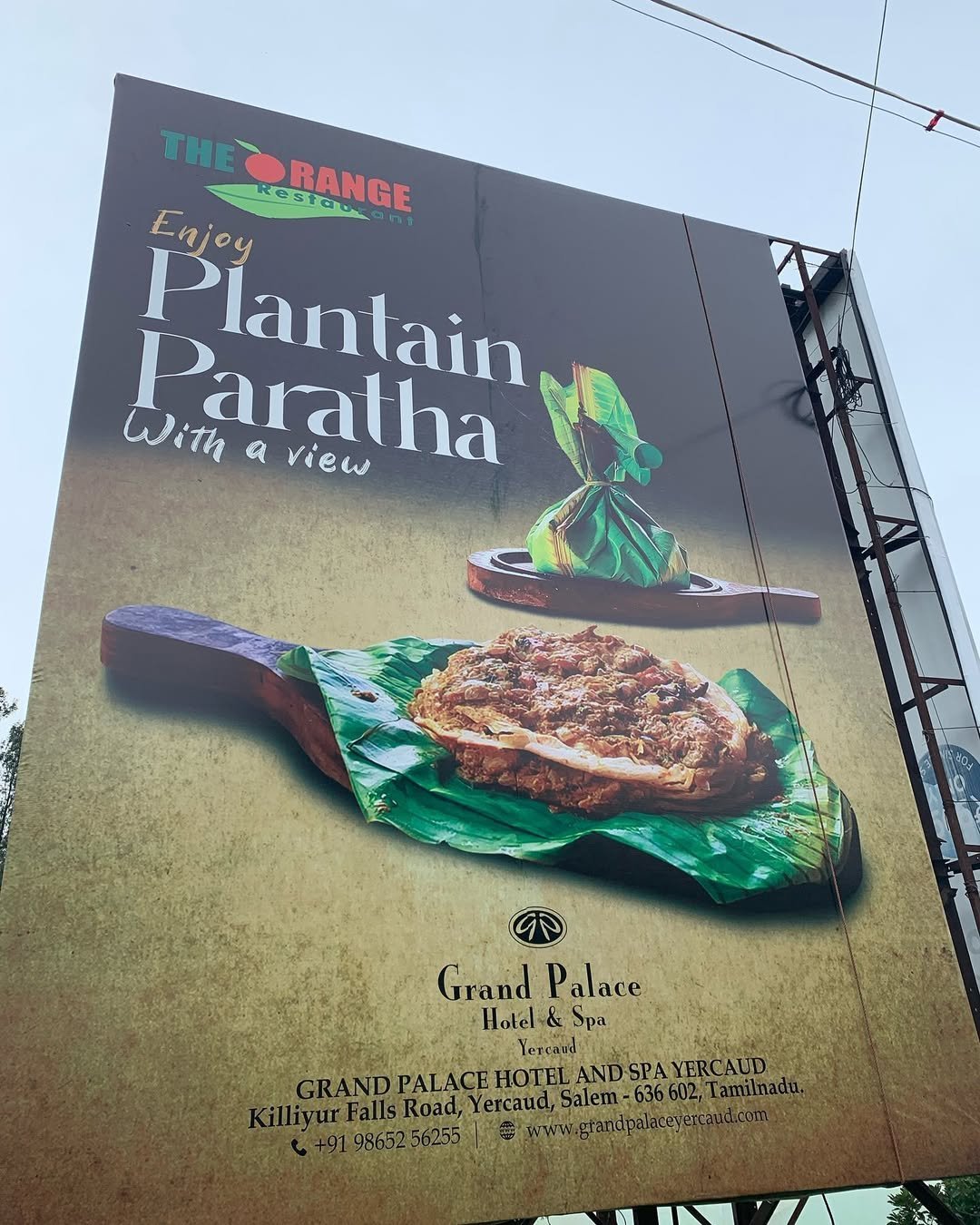
A booking website works best when everything else points to it. Alongside the Kolaahalam film, we have used two other routes in Yercaud. For Amar Resorts we ran a creator collaboration backed by Meta ads. For Grand Palace, hoardings at key tourist points went from edited visuals to installation in three days.
Whatever the channel, give it somewhere to send people: a short web address on the hoarding, a tracked link in the creator’s bio, and an ad landing page that opens on the rooms and the Book Now button. Tracked links, such as UTM-tagged URLs, show which channel actually produced bookings. There is more on this in our page on hospitality marketing in Yercaud.
Case study: Cavin Stay’s website with an integrated booking engine
Cavin Stay in Yercaud needed a website with direct bookings built in. We designed and developed the site and integrated a booking engine into it.
A few choices visible in the finished design apply to most stays:
- The Book Now button sits in the main menu, so it is never more than a tap away.
- An aerial photograph shows the property in its forest setting on the first screen.
- The same design adapts to phones, laptops and desktops.
See the full Cavin Stay case study.

Launch checklist for resort and hotel owners in Yercaud and Salem
Before your resort booking engine website goes live, check each of these:
- Booking engine and payment gateway accounts in your business’s name, with your own logins.
- Test bookings made and cancelled on a phone, with confirmation emails checked.
- Payment gateway live, with UPI and cards tested.
- Rates and availability matching across the website, engine and OTAs.
- Every room page complete with photos, occupancy and policies.
- Tap-to-call and WhatsApp links working.
- Google Business Profile verified, hotel details filled in and website linked.
- Free booking links requested through your provider.
- Structured data checked with Google’s Rich Results Test.
- Hero image loading quickly on mobile data.
- A named person answering enquiries through the season.
For the domain and hosting questions, what drives the build price and the yearly running costs, read our guide to website development cost in Salem.
Frequently asked questions
Do I need a booking engine, or is an enquiry form enough?
It depends on size and volume. A homestay or cottage with a few rooms, where the owner answers every call, can manage well with an enquiry form and WhatsApp. Once you have several room types, regular weekend demand or OTA listings to keep in step, a booking engine with a channel manager saves time and prevents double bookings. Many properties start simple and add an engine later.
Can my own website appear in Google hotel results next to the OTAs?
Yes, through Google’s free booking links, which can show your own booking site and rate when people search for hotels. Google doesn’t charge for clicks on them. If you use a booking engine or reservation system, ask the provider whether it is connected to Google and can set them up. Ranking depends partly on price accuracy and your landing page.
Should I stop listing on OTAs once I have a booking website?
Usually not. OTAs help travellers who have never heard of you find your property, while your website is where return guests and people who already know your name can book directly. Most properties do best with both, connected through a channel manager so availability stays accurate. Read your OTA contracts for any terms about the prices you show on your own site.
Who updates room availability and rates after the website goes live?
Normally you or your front desk, through the booking engine’s dashboard or your channel manager, because rates and availability change daily. Your web developer builds the site and connects the engine, but shouldn’t be the person changing tonight’s price. Ask for training at handover, and agree who will update offers, packages and photos on the website itself.
What photos does a resort website need?
A strong set for every room type, including the bathroom and the view, plus common areas, dining, the pool or garden, food and the approach to the property. Shoot in good light at the best time of day, and keep both horizontal and vertical versions so one shoot serves the website, OTA listings, reels and stories.
How do I encourage guests to book direct instead of through an OTA?
Make direct booking easy and worthwhile. Put a clear Book Now button everywhere, answer WhatsApp quickly, and offer something guests value, such as a welcome drink, early check-in or a package only on your site, within the terms of your OTA agreements. Mention your website at checkout and in follow-up messages so return guests come straight to you.
Image credits: Photo by Kottairajcs on Wikimedia Commons, CC BY-SA 4.0. Photo by aksinfo7 universe on Pexels, Pexels License. Other images: The Idea Shop client work.

Running a stay in Yercaud or Salem?
Talk to us about a booking website, and the photos, films and outdoor advertising that bring guests to it.
Keep reading
Website Development Cost in Salem: What Drives the Price and What a Good Agency Includes
What really sets the price of a website in Salem, which costs come back every year, and the questions that make two quotes comparable.

Hoarding Design in Salem, Bus Wraps and Theatre Ads: What Works on the Road and on Screen
How to design hoardings, bus and van wraps and cinema spots that work in Salem, with the timelines, permits and ad rules to check before you print.
How to Design Social Media Posts People Stop For: A Guide for Salem Businesses
Official Instagram sizes, Tamil and English copy, templates versus custom design and honest use of AI: a practical guide for Salem businesses.