Design & Branding
Tamil Logo Design: Bilingual Logos and Name Boards for Salem Businesses
How to give your business a Tamil name and an English name that look like one family, read well from the road and follow Tamil Nadu's name board rule.
By The Idea Shop team, Salem19 November 202611 min read
On this page
- Why most Salem brands need their name in both Tamil and English
- What Tamil Nadu's name board rule says, in plain words
- Translate, transliterate or keep it English? Choosing the Tamil form of your name
- Tamil logo design basics: pairing Tamil and English letterforms
- The lockups you will actually need: stacked, side by side, Tamil-only and English-only
- Choosing Tamil fonts: custom lettering, licences and Unicode
- Testing a bilingual logo where Salem will see it: boards, vehicles, packs and phones
- Writing Tamil rules into your brand guidelines
- Bilingual branding mistakes to avoid
- Frequently asked questions
Key takeaways
- Tamil Nadu's Rule 15 asks for Tamil first and most prominent on a name board, with English second.
- Settle the Tamil form of your name early and use one spelling everywhere.
- Good Tamil logo design plans both scripts together, so neither looks bolted on.
- Build stacked, side-by-side, Tamil-only and English-only lockups.
- Use licensed Unicode Tamil fonts and one name form on Google Business Profile.
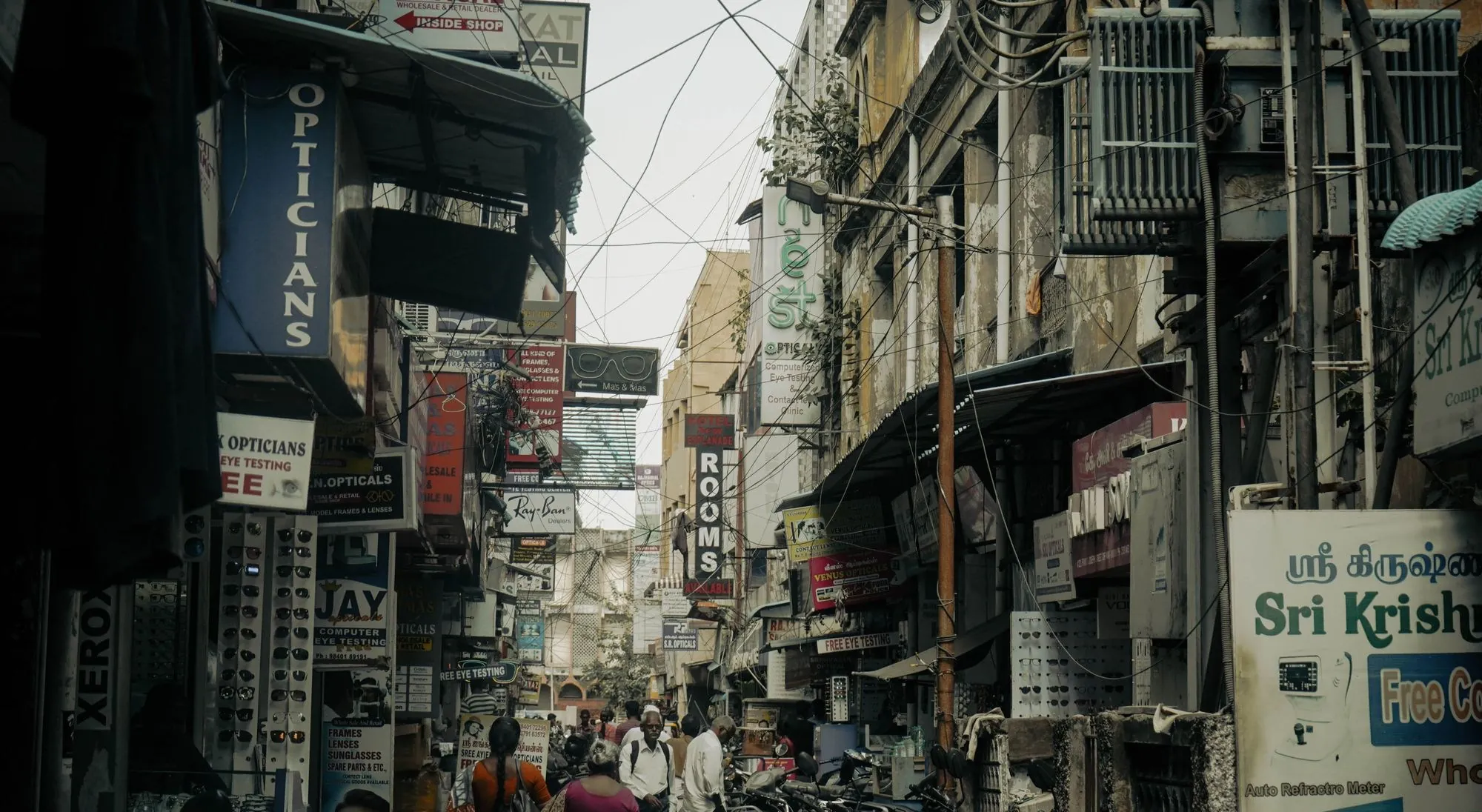
Look along any busy Salem street, from the Shevapet market to Cherry Road, and you will see Tamil and English sharing the same name boards. Sometimes the two sit together like one family. Too often the English logo looks designed and the Tamil looks as if it was typed in at the flex shop an hour before installation. Good Tamil logo design closes that gap by planning both scripts together, from the first sketch to the final board.
This guide is for Salem owners who sell to Tamil-speaking customers and also need English, from sweet stalls and bakeries to saree shops, clinics and restaurants. It covers the name board rule, the Tamil form of your name, pairing the scripts, lockups, fonts and testing. If you are planning brand identity design in Salem, it will help you brief well and judge the drafts.
Why most Salem brands need their name in both Tamil and English
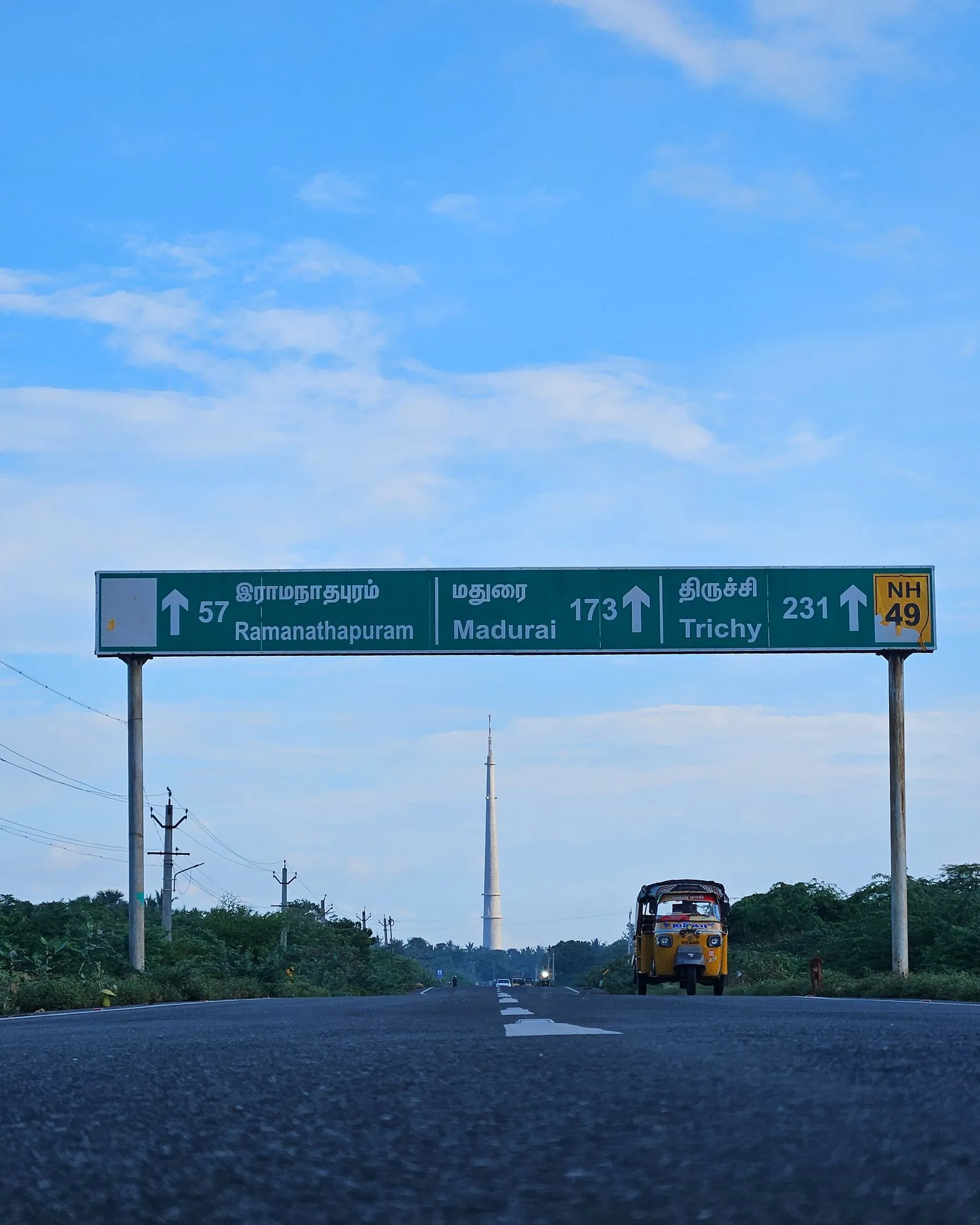
Plenty of Salem shoppers read Tamil faster than English: older customers, families in from Omalur or Attur for festival shopping, anyone glancing up from a bus. English carries your name on Google Maps, delivery apps and websites, and to customers in Coimbatore or Bangalore.
So the real question is not whether to use both scripts, but which one leads where. A useful starting split:
- Name board and shop front: Tamil leads, and in Tamil Nadu the rule expects it to.
- Boxes, bags and labels sold locally: both, with the Tamil easy to spot. Our guide to food packaging design in Salem covers the label side.
- Instagram, website and search: usually English-led, with Tamil lines for warmth. See how to design social media posts for setting both scripts on a phone screen.
- Festival creatives: Tamil greetings often feel more natural for Pongal, Puthandu and Deepavali (see our festival post ideas for Tamil Nadu businesses).
What Tamil Nadu's name board rule says, in plain words
The rule sits in the Tamil Nadu Shops and Establishments Rules, 1948, published by the state Labour Department. Rule 15, in the form substituted in 1983, makes three points about the name board of every establishment:
- The board must be in Tamil. Where other languages are also used, English takes second place and any other language comes after it.
- Tamil must be the predominant language, with more space on the board than any other.
- The Tamil letters must be in the reformed script, as defined by a 1978 government order.
In July 2024 the Chief Minister urged traders to make sure their name boards are in Tamil. For a designer, the message is simple: your board cannot be a blown-up English-only logo. The Tamil version has to exist, with room to take the larger share.
What the reformed script means for lettering
In 1978, Tamil Nadu standardised the shapes of a handful of combined letters, such as ணா, றா, னா, லை and ளை, which earlier had their own special forms. Heritage-style lettering sometimes revives the old shapes. That can be charming on a festive pack, but on a name board, stay with the reformed forms that standard Unicode Tamil fonts use.
Information, not legal advice
This is our plain reading of the published rule. Penalties and exemptions are for the authorities, so check with the Labour Department before you print if you are unsure how it applies to you.
Translate, transliterate or keep it English? Choosing the Tamil form of your name
Before anyone draws a letter, decide what your name is in Tamil. There are three routes.
- Transliterate: write the same sounds in Tamil letters, so an imaginary Royal Bakes becomes ராயல் பேக்ஸ். Customers who know the English name recognise it at once.
- Translate: use Tamil words that carry the meaning. This suits descriptive words such as sweets, silks or clinic when the Tamil sounds natural, but a fully translated brand name can feel like a different business.
- Start in Tamil: if your name is Tamil to begin with, such as a family name or a place, the Tamil is the original and the English spelling is what you need to settle.
Transliteration traps
Tamil uses one letter where English separates sounds such as k and g, t and d, or p and b, so Bakes and Pakes would be written the same way. Sounds like f, z and sh need the aytham (ஃப) or Grantha letters such as ஜ, ஷ and ஸ, which some owners prefer to avoid. Long and short vowels matter too.
Pick one spelling, have native readers say it aloud and check it carries no awkward meaning. Then write it into your guidelines so the board, box and Instagram bio never disagree.

Tamil logo design basics: pairing Tamil and English letterforms
The two scripts are built on different logic. English capitals are tall and fairly narrow. Tamil has no capitals; many of its letters are wide, rounded and looped, and vowel signs attach before, after, above or below a consonant (கி, கு, கெ, கை). A Tamil word therefore needs more vertical room, and often more width, than its English partner.
Good Tamil logo design treats the two scripts as siblings, not as a main act and a translation. In practice:
- Match weight, not height. Set the Tamil so it looks as heavy and as large as the English. Tamil often has to be set a little bigger to look the same size.
- Share one idea. Carry the same curve, stroke ending or slant through both scripts, in the same colours.
- Plan the length. The Tamil version of a name is often longer. Decide early whether it sits above, beside or below the English.
- Do not fake it. Software bold, stretched letters and thick outlines distort Tamil loops and close up the inner spaces.
- Give Tamil the same craft. A hand-drawn English wordmark next to a default Tamil font is the clearest sign that the Tamil was an afterthought.
The lockups you will actually need: stacked, side by side, Tamil-only and English-only
A lockup is a fixed arrangement of your symbol and name that nobody is allowed to rearrange. A bilingual brand usually needs five:
| Lockup | Where it works |
|---|---|
| Stacked, Tamil above English | Name boards, shop fronts, sweet box lids, carry bags |
| Side by side | Wide fascia boards, vehicle panels, hoardings, website headers |
| Tamil only | Festive greetings, local press ads, Tamil panels on packs, WhatsApp status |
| English only | Social handles, delivery apps, listings and stores outside Tamil Nadu |
| Symbol alone | Profile pictures, website icons, stickers, seals |
For each, fix the clear space, minimum size and colour versions (full colour, one colour, white on dark). Brands that also sell in Bangalore or Singapore lean more on the English-only lockup, so it must stand on its own.
Vehicles show why several lockups matter. On the bus wrap for Neelgiri Tarpaulins & Interiors, which The Idea Shop designed, printed and had on the road in a day, the window panels alternate the Tamil and English versions of the name, with the services listed in Tamil on the body below.

Choosing Tamil fonts: custom lettering, licences and Unicode
Custom lettering or a typeface?
For the logo itself, custom lettering is usually worth it: the Tamil wordmark is drawn to match the English, so the brand owns its shapes. For everything else, from menu cards to posts, choose a typeface whose Tamil sits comfortably beside your English brand font.
Check the licence
Every font comes with a licence. Google Fonts’ Tamil collection is short (under twenty families when we checked in November 2026) but openly licensed. It includes workhorses such as Noto Sans Tamil, Mukta Malar, Hind Madurai and Catamaran, and display faces such as Baloo Thambi 2 and Arima. Commercial fonts need a licence that covers logo, print and web use. Ask your designer which fonts your logo uses and get the licence details in writing.
Insist on Unicode
Unicode gives every Tamil character a standard code, in a block running from U+0B80 to U+0BFF (see the Unicode Tamil code chart). Some DTP and flex shops still use older non-Unicode fonts, which place Tamil shapes on English keyboard codes. The text looks right in the design file, then turns to gibberish when copied into a website, WhatsApp or a Google listing. Ask for your Tamil name as Unicode text with the logo files.
Testing a bilingual logo where Salem will see it: boards, vehicles, packs and phones
A logo that looks balanced on a laptop can fall apart on the street, so the last stage of Tamil logo design is testing it where customers will meet it:
- The name board: print a full-size section and view it from across the road and from a moving two-wheeler.
- Backlit flex at night: thin strokes and small loops can fill in when lit from behind, so open up tight inner spaces.
- Vehicles: windows, handles and curves break up long names, which is where the side-by-side lockup earns its place.
- Packs and stickers: check the smallest use, such as a sweet box lid or a jar label, where vowel signs below the line can run into a fold or a seal.
- Phones: profile pictures crop to a circle, so the symbol or a short version has to survive alone.
One more check happens online. Google’s guidelines for Business Profiles ask for the name customers know from your signage, but do not allow the same name repeated in two scripts, even when your storefront shows both. Choose one form, usually the one customers search for, and use it consistently across Maps, your website and social profiles.
The two-second check
Show the board design on a phone to three regular customers for two seconds each, then ask what the shop is called. If they read the English and skip the Tamil, the balance is wrong.
Writing Tamil rules into your brand guidelines
Bilingual brands drift quickly, because Tamil text passes through many hands, from the flex printer to whoever types the Instagram caption. A short Tamil page in your brand guidelines prevents most of it. It should hold:
- The approved Tamil spelling of your name, as Unicode text people can copy.
- Your transliteration choices, including whether you use Grantha letters.
- Every lockup, with its files, clear space and minimum size.
- Tamil heading and body fonts, with licence details.
- Tone in Tamil: formal or conversational, and how freely English words appear in Tamil script.
- Who checks Tamil copy before anything goes to print.
When you collect the final files, make sure the Tamil and bilingual versions come in the same formats as the English logo. Our guide to logo design cost in Salem lists the files to ask for.
Bilingual branding mistakes to avoid
Most problems in Tamil logo design come from treating the Tamil as a translation job at the very end. Watch for these:
- Tamil added at the print shop, typed in whatever font happens to be installed.
- Three spellings of the same name across the board, the box and the bio.
- English larger than Tamil on the name board.
- Non-Unicode Tamil in files meant for screens.
- Machine-translated taglines no native reader has checked.
Each costs little to avoid at the design stage and a lot to fix once a board is up. If you would like one Salem team to look at your board, packs and feed together, see what we do for Salem brands.
Frequently asked questions
Is Tamil compulsory on shop name boards in Tamil Nadu?
For establishments covered by the Tamil Nadu Shops and Establishments Act, yes. Rule 15 of the 1948 Rules requires the name board in Tamil, with Tamil given the most space and written in the reformed script, English second and any other language after it. If you are unsure how it applies to your premises, check with the Labour Department.
Should Tamil or English be bigger on my name board?
Tamil. The rule asks for Tamil to be predominant, with more space than any other language, and for English to come second. Put Tamil on top or first in reading order, with the larger share of the board. English should still be clear, because it does the heavy lifting online and with visitors from outside Tamil Nadu.
Should the Tamil version of my brand name be a translation or a transliteration?
For most brand names, transliteration works best, because customers already know the sound of the name and recognise it immediately. Translation can suit descriptive words such as sweets, silks or clinic when the Tamil sounds natural. Whichever you choose, settle on one spelling, have native readers check it aloud and use it everywhere. சுருக்கமாக: ஒரே தமிழ் எழுத்துக்கூட்டலை எல்லா இடத்திலும் பயன்படுத்துங்கள்.
Can I use any Tamil font in my logo?
No. Check three things first. The licence must allow logo, print and web use; Google Fonts’ openly licensed families are a safe start. The font should be Unicode, so your name works on websites and phones. And it should match the weight and character of your English lettering. For the logo itself, custom Tamil lettering usually looks better than any ready-made font.
Do I need the Tamil version on packaging and social media too, or only on the name board?
The name board rule covers the board. Packaging labels follow separate food labelling and legal metrology rules, and social media has no language rule. Even so, using the same Tamil and English versions everywhere makes you easier to recognise. A practical split is Tamil-led on the board, both scripts on local packs, and English-led online, with Tamil for greetings and offers.
Can my English-only logo get a Tamil version without a full rebrand?
Usually, yes. If your symbol and colours already work, a designer can draw a Tamil wordmark that matches your English lettering and build the stacked and side-by-side lockups around them. You keep what customers know and add what the board needs, rolling it out as boards and boxes come up for reprinting. For many established Salem businesses, this is the most practical form of Tamil logo design.
Image credits: Photo by Alen J on Pexels, Pexels License. Photo by Dipu Ravi on Wikimedia Commons, CC BY-SA 4.0. Photo by Muhammed Ziyad T V on Pexels, Pexels License. Other images: The Idea Shop client work.

Want your brand to read well in Tamil and English?
Talk to The Idea Shop about your name, your board and your packs. Visit us at 3/77 Convent Road, Alagapuram, Salem, or call, and yes, we can talk in Tamil.
Keep reading
What Does a Branding Agency Do? Strategy, Identity and Guidelines for Salem Businesses
What a branding agency really does for a Salem business: strategy, identity, guidelines, rebrand or refresh, and how to write a brief.
Logo Design Cost in Salem: What You Pay For, How the Process Works and the Files You Should Get
Why logo quotes in Salem vary so much, how a proper logo design process runs, and the files and checks to insist on before you pay.
Food Packaging Design in Salem: A Practical Guide for Sweet Shops, Bakeries and Food Brands
Box types, materials, festive editions, FSSAI and Legal Metrology label must-haves and print planning, for Salem sweet shops, bakeries and food brands.